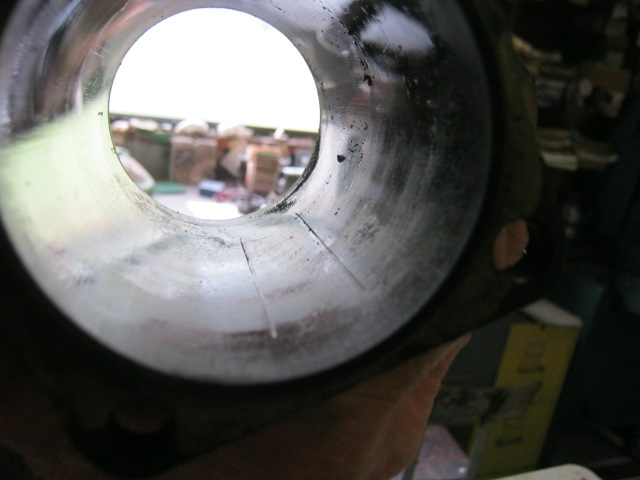
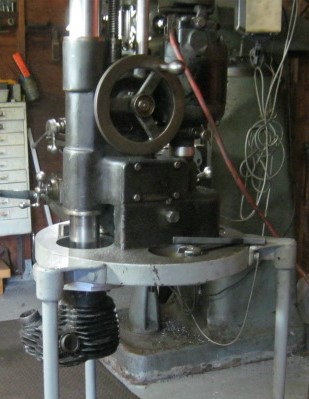
When the motor was taken apart we found that one of the wrist pin c clips came off and the wrist pin ran up and down the side of the cylinders. Lucky that the motor was not run very long this way. 30 thousandth over and the scratches were gone. Here are some pictures showing the scratched sidewall and the process of boring out the cylinders.
Then we have the cylinder heads. They had a few fins broken off. This is pretty common on these old cast iron heads.
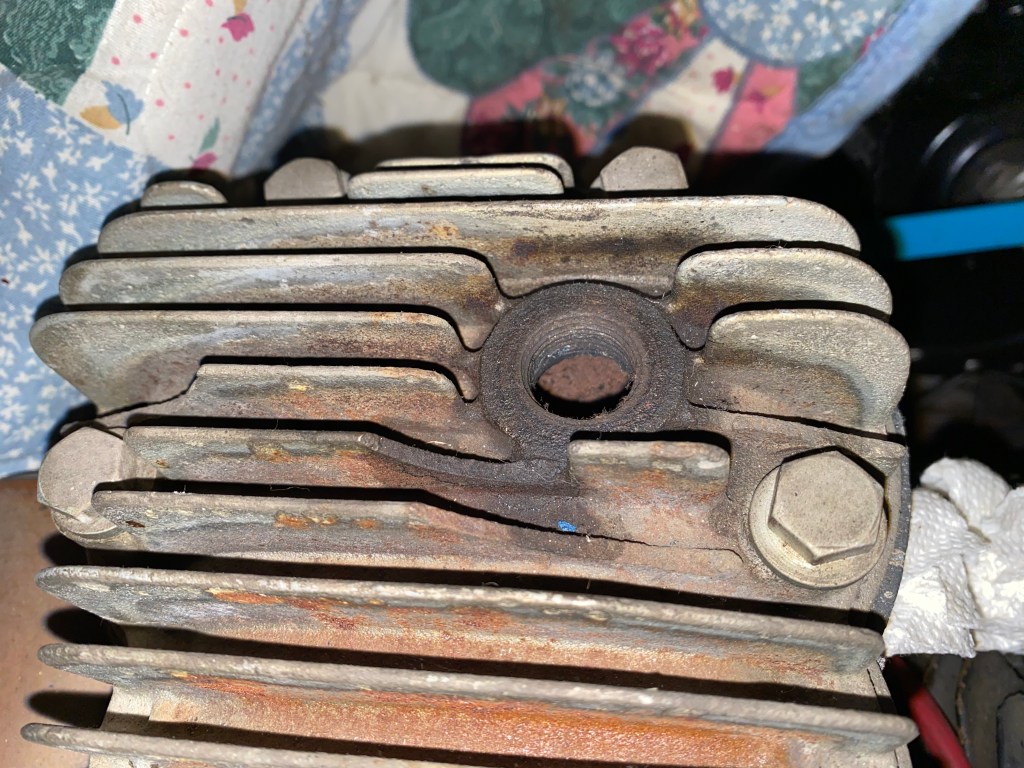
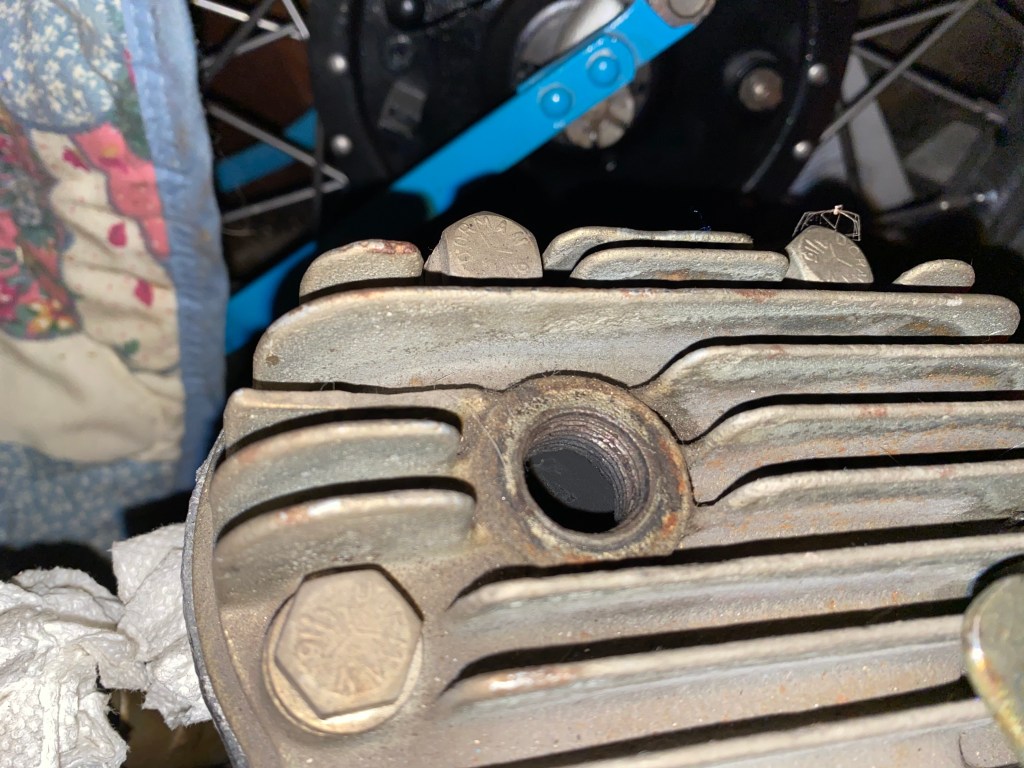
So, off they went to Cast Iron Fusion welding in Utah where Jon Reed was able to make them like new again. With nickel platting being my finish choice this was the only way that I could have had them repaired as the nickel plating process eats away at the common brazing usually used for a repair like this. To see more about this process check out his web sight. castironfusionwelding.com
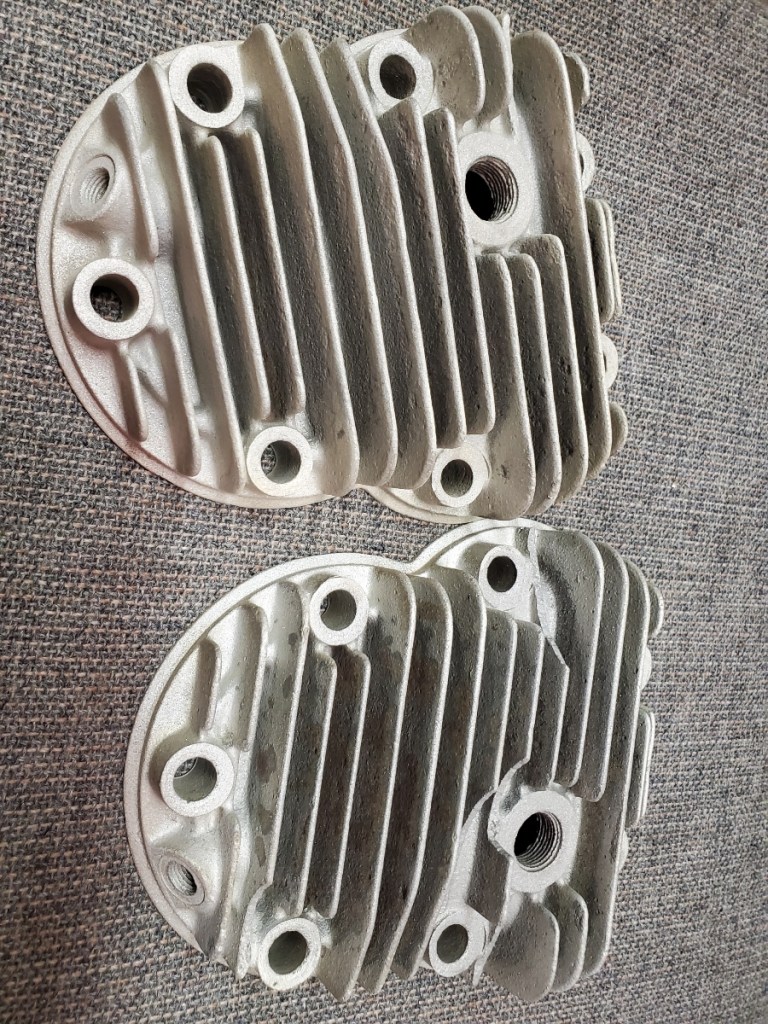
I am simply blown away at the results! here are the heads all cleaned up and ready to be repaired. They look so much better with all the rust gone but you can clearly see all of the broken fins.
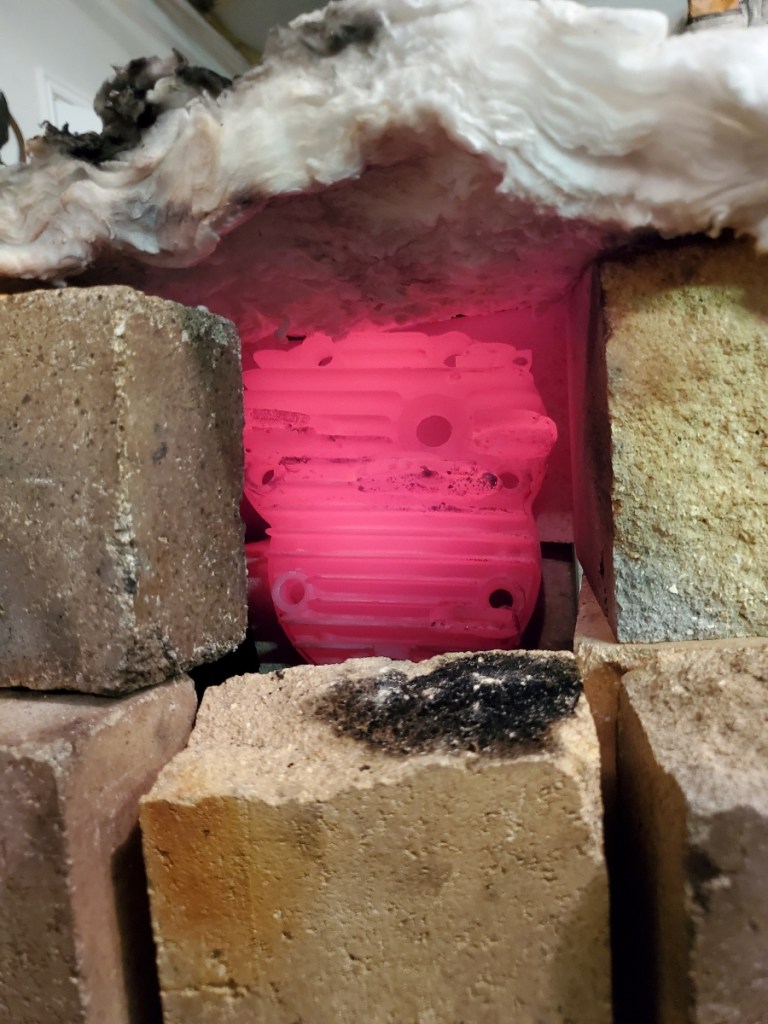
Here is one of them in the furnace mid repair.
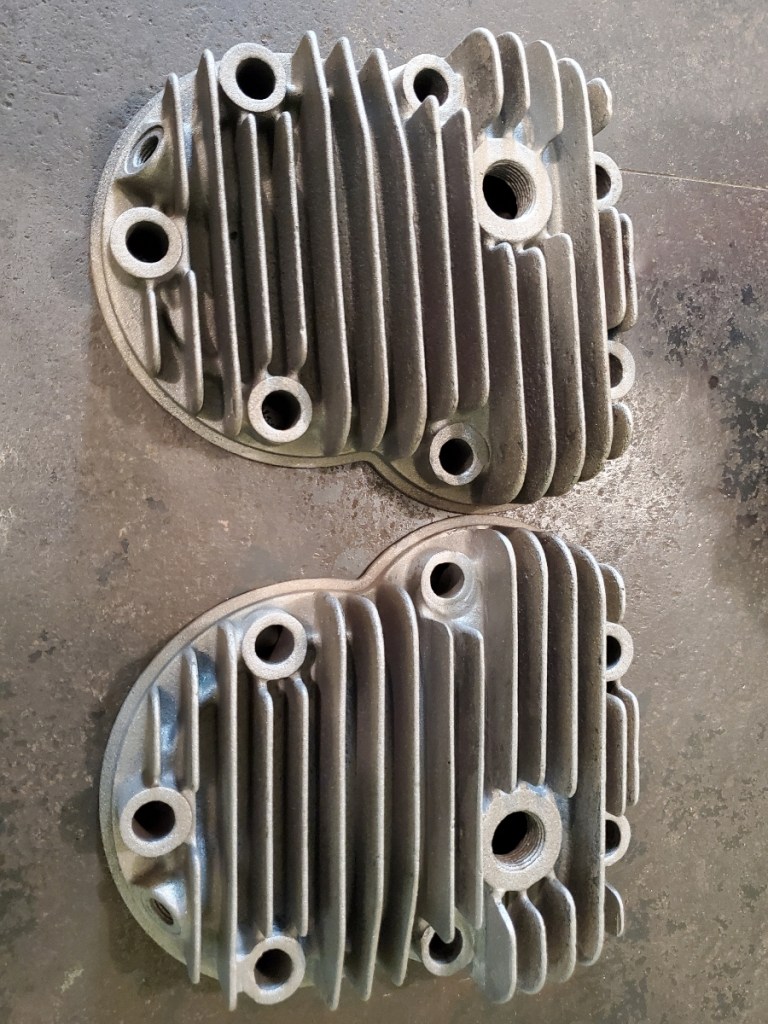
Lastly here they are again after the repairs are complete. Absolutely amazing! They look like they could be right off the shelf in 1931! They are going to look so incredible once they are nickel plated.

 1931 Indian 101 Scout Rebuild
That the piston pin circlip jumps off is a very big problem with the Indian engines and utmost care must be taken with the choice and mounting of the circlips. If you have a choice, the safest is Spirolox spiral type of retaining ring with a groove for it in the piston pin. With a round wire C-clip, use the stiffest one with the thickest wire that fits the groove and cut off all the tangs. To be able to pry the clips out at a later stage, drill or grind a access grove at the side of the pin hole. And never use a round wire clip two times. The piston pin fit in the connecting rod bushing must not be tight, the pin should fall through the bushing by its own weight without effort.
LikeLike